What the New Quinnipiac AI Poll Actually Found
The Quinnipiac University poll, conducted March 19–23, 2025, surveyed 1,397 adults across the United States with a margin of error of ±3.3 percentage points. The findings paint a picture of a nation growing more uncomfortable with artificial intelligence — not less.
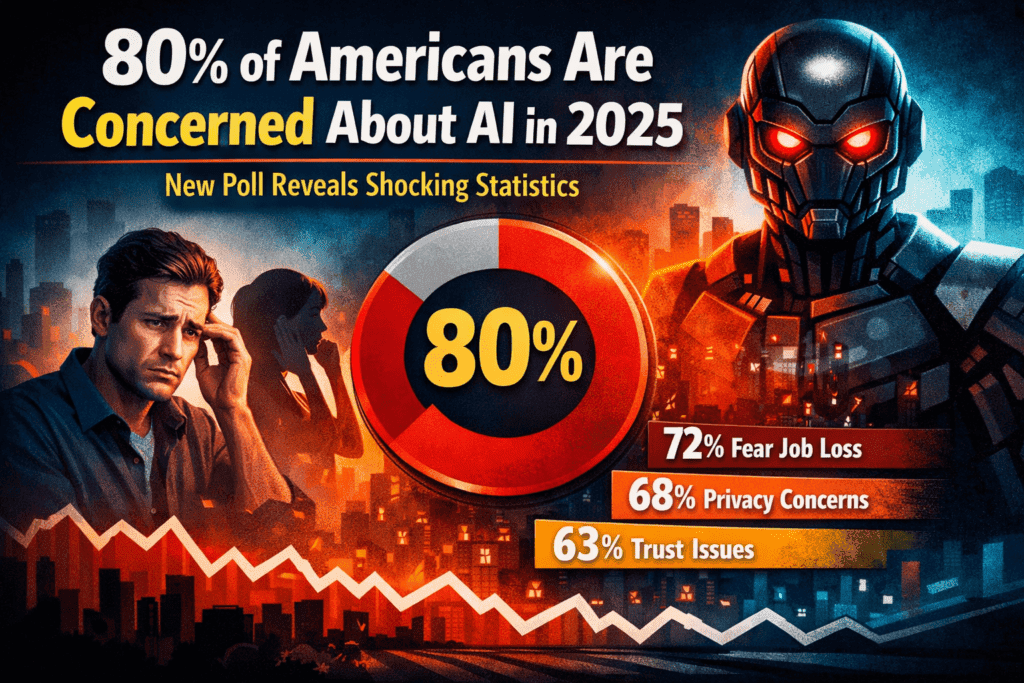
According to the poll, 80% of Americans said they are either “very concerned” or “somewhat concerned” about AI. Only 18% said they were not particularly worried, and just 2% were unsure or gave no response.
Even more telling: 51% of Americans said AI is developing faster than they expected. Only 8% said it’s moving too slowly.
The Numbers Are Getting Worse — Not Better
A second Quinnipiac poll, released alongside the first, reveals that public opinion on AI has deteriorated significantly over the past year.
| Concern Area | 2024 | 2025 | Change |
|---|---|---|---|
| AI will do more harm than good | 44% | 55% | ▲ +11% |
| AI will reduce job opportunities | 56% | 70% | ▲ +14% |
| Oppose AI data centers locally | — | 65% | New data |
| AI will worsen education | — | 64% | New data |
These aren’t small shifts. A 14-point jump in job loss fears in just one year is a massive red flag — and one that AI companies and policymakers can no longer ignore.
Why Are Americans So Worried? The Big 4 Fears
1. 🏭 Job Loss — The #1 Fear
Seven out of ten Americans now believe AI will reduce job opportunities — not create them. This fear cuts across industries, from content writing and customer service to logistics and manufacturing. Even Anthropic CEO Dario Amodei has publicly warned that AI will trigger an “unusually painful” disruption in the job market.
2. 💡 Soaring Energy Costs & Data Centers
Tech giants including Amazon, Meta, Google, and Microsoft plan to spend a combined $650 billion on AI infrastructure in 2025 alone. This has sparked a backlash in communities across the US, with 65% of Americans opposing the construction of AI data centers near them — citing electricity costs, noise, and water consumption as top concerns.
Senator Bernie Sanders and Rep. Alexandria Ocasio-Cortez have responded with the Artificial Intelligence Data Center Moratorium Act, which aims to pause new AI infrastructure construction until proper regulations are in place.
“A moratorium will give us time — time to understand the risks, time to protect working families, time to defend our democracy.” — Senator Bernie Sanders
3. 📚 Damage to Education
Nearly 64% of Americans believe AI will make education worse, not better. As AI writing tools and chatbots become common in classrooms, concerns about critical thinking, academic integrity, and student learning are growing louder.
4. 🗳️ Political Influence & Misinformation
A separate NBC News poll found that 46% of Americans hold a “somewhat negative” or “very negative” view of AI — making it more unpopular than some government agencies. Voters are increasingly alarmed about AI-generated misinformation, deepfakes, and the influence of AI billionaires on elections.
🤔 Worried About AI’s Impact on Your Work?
Instead of fearing AI, learn to use it to your advantage. Explore our free browser-based AI tools — no signup, no cost, and no data stored. Use AI smarter, not harder.
Should You Be Worried Too?
Here’s the nuanced truth: AI does carry real risks — job displacement, misinformation, energy consumption — but it also offers genuine opportunities for those who learn to use it effectively. The people who will thrive aren’t those who fear AI blindly, and they’re not those who blindly trust it either. They’re the ones who understand it.
According to a Pew Research Center analysis, most experts still believe AI will create new types of jobs even as it eliminates others — but the transition period will be rough for workers who don’t adapt.
If you’re a student, freelancer, or small business owner, the smart move right now is to build AI literacy — understanding how tools work, what they’re good at, and where they fail. Our AI tools blog at AiToolPower.com covers exactly these topics in plain English, helping everyday users get the most out of free AI tools without the technical overwhelm.
Frequently Asked Questions
✅ Final Takeaway
The data is clear: public trust in AI is declining fast, and for understandable reasons. Job displacement, sky-high energy costs, and fears about misinformation are all legitimate concerns. But panic isn’t the answer — preparation is.
Whether you’re a professional worried about your career or a student trying to navigate AI in school, the best thing you can do right now is get informed and get skilled. AI isn’t going away. The question is whether it works for you or against you.